
Build a Rich County Deed Chain Backward
Tracing prior owners is a chain of recorded instruments rather than a single name query. Start with the current vesting deed. Record its parties and its legal description. Then follow the named grantor back in time. Locate that same person as a grantee on an earlier deed. Rich County's Recorder & Surveyor keeps the land records. Its public materials do not state which years the grantor-grantee index covers online or offer a web search endpoint. Treat any working table as a research ledger. Enter only dates and references you have read from actual county records.
| Source | Years It Covers | Where Held | What It Shows |
|---|---|---|---|
| Latest vesting deed | Copy the stamped date from the instrument | Rich County Recorder & Surveyor | Current grantee, grantor, parcel description, and filing reference |
| Earlier deed in the chain | Coverage range not verified online | Recorder counter or index the office identifies | Prior grantee and transfer description |
| Recorded subdivision plat | Dates are on individual stamps | County final-plat directory and recorder | Lot, phase, roads, easements, and approvals |
| Archives record series | Use the catalog; deed-book start not established | Utah State Archives | Custodian and series leads, not a complete title chain |
Tracing prior owners in Rich County takes a sequence of verified instruments. It is not a single name lookup. Start with the current vesting deed. Write down its parties and legal description. Then treat the grantor as a grantee from an earlier deed and keep working back. The county's Recorder & Surveyor holds the land records. Its public materials do not state which years the grantor-grantee index covers online or offer a web search endpoint. Treat the table as a research ledger. Enter only dates and references read from actual county records.
Read the Rich County Chain One Deed at a Time
Let the newest deed set the legal-description baseline. For a subdivision parcel, compare the plat name, phase, lot, section-township-range, and recorder stamp against the parcel record. The county index may not reach a period you need. Ask the recorder which older volume or series applies. The Archives catalog can help you identify holdings. Never fill an unknown year span with a guessed cutoff.
- Obtain the current vesting deed and note its grantee, grantor, date, and legal description.
- Search the grantor as a grantee to locate that party’s earlier acquisition.
- Compare the lot, phase, parcel key, and legal text before accepting the earlier record.
- Repeat until the index or available volume ends; ask the recorder about older books or Archives series.
- Grantor
- The party identified as transferring an interest.
- Grantee
- The party identified as receiving the interest.
- Chain of title
- Linked land instruments, checked against the same legal description.
- Book and page
- A volume locator; preserve the exact book name and page.
- Recorder number
- A filing identifier used to locate a specific instrument.
Rich County’s Deed Index Has No Verified Cutoff
Rich County publishes no online grantor-grantee endpoint. The recorder has not stated the earliest year its index covers. The county’s “abstract” and plat folders cannot be treated as a deed index. That status holds without confirmation from the office. So the right next step depends on what the recorder says exists for the period and instrument type you need. Ask the staff to check their records. Have them name the book, index, or archival series before you call any chain complete.
Older deeds may live in a physical volume or on microfilm. The office has posted no date range for that route. Keep every gap visible in your notes. A missing web result can reflect an old parcel format or a name variant. It can also reflect an estate transfer. Or it may be a record that was never digitized. The county’s public counter, phone, and a narrow written GRAMA request remain the fallback channels.
Use Rich County Plats to Track Lot History
Plat images hold clues a deed alone will not give. A Rich County parcel may shift shape across phases. The county plat directory covers Bridgerland Village, Harbor Village, Lake View, Sweetwater, SW PK Omega, Laketown Meadows, and Randolph Heights. Other named developments appear too. Amendments and condo, townhome, or RV phases carry similar labels. Search the full development name plus the phase. Then read the plat stamp and lot call before tying the sheet to a deed.
Bridgerland Village Plat E Phase IV is one documented example. The plat was recorded under recorder number 52166, Book 77, Page 383. It bears a June 3, 1998 stamp. Lot and phase details, approvals, and easements all appear on the sheet. A legal boundary description does too. A directory timestamp is not a recording date. For all it shows, a plat traces a subdivision's origin and parcel geometry. It does not show every prior owner of a lot.
Find Rich County Series at Utah Archives
The Utah Archives record-series lookup lists Rich County Recorder, Clerk, and First District Court material. Each entry identifies a custodian series for a given record type. It does not supply a start date for deed books, though. Nor will it confirm that a full parcel chain sits in the Archives. Even so, the official Rich County series listing gives you a firm place to begin. Start there.
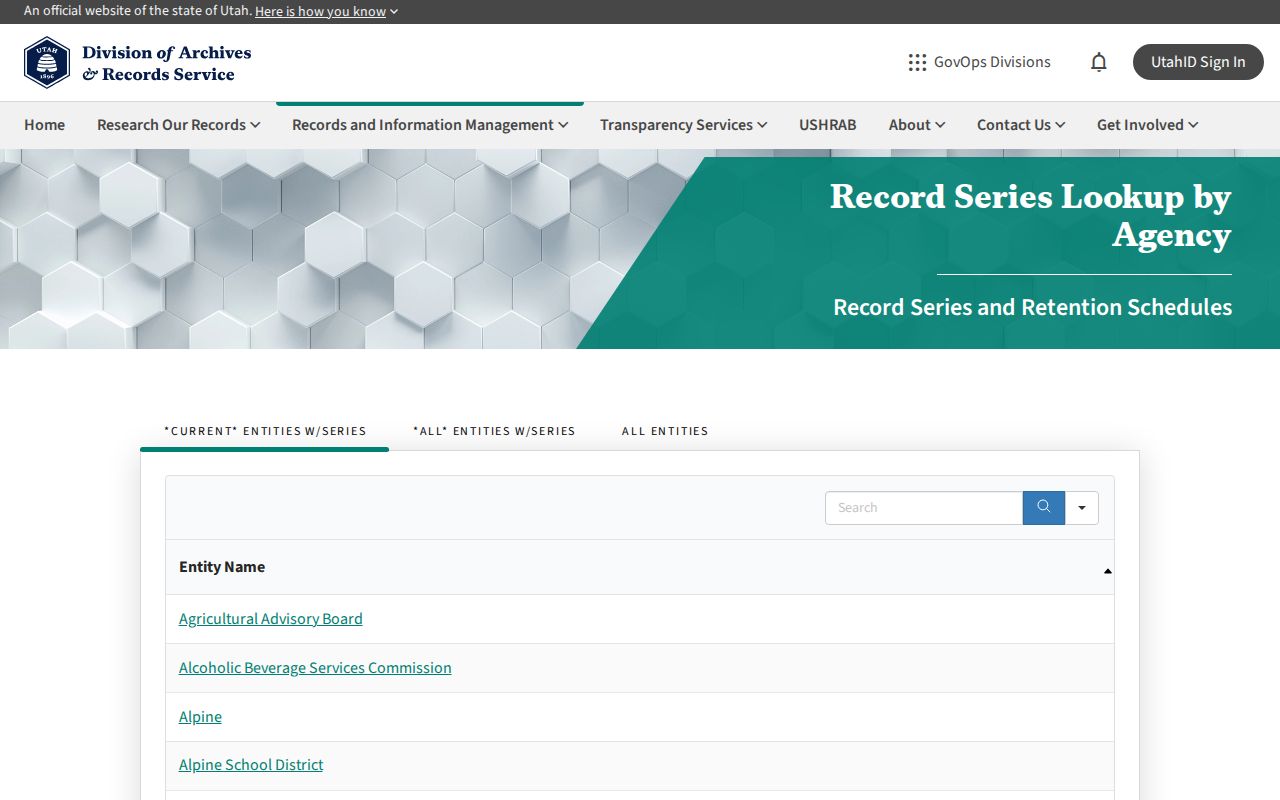
Use the catalog to sharpen your question. Before contacting the Archives or the county recorder, name the series, the period, and the record type you need.
Separate Identity Leads From Title Records
Birth records answer a different question. The Utah Archives index lists a Rich County Clerk birth register. It covers 1898 through 1905. It is one of many historical identity leads there. That entry is not a deed record, transfer instrument, or modern certificate. Use it sparingly. The Rich County birth-register finding aid helps clarify old names in a personal-history search. Ownership evidence still comes from recorder instruments.
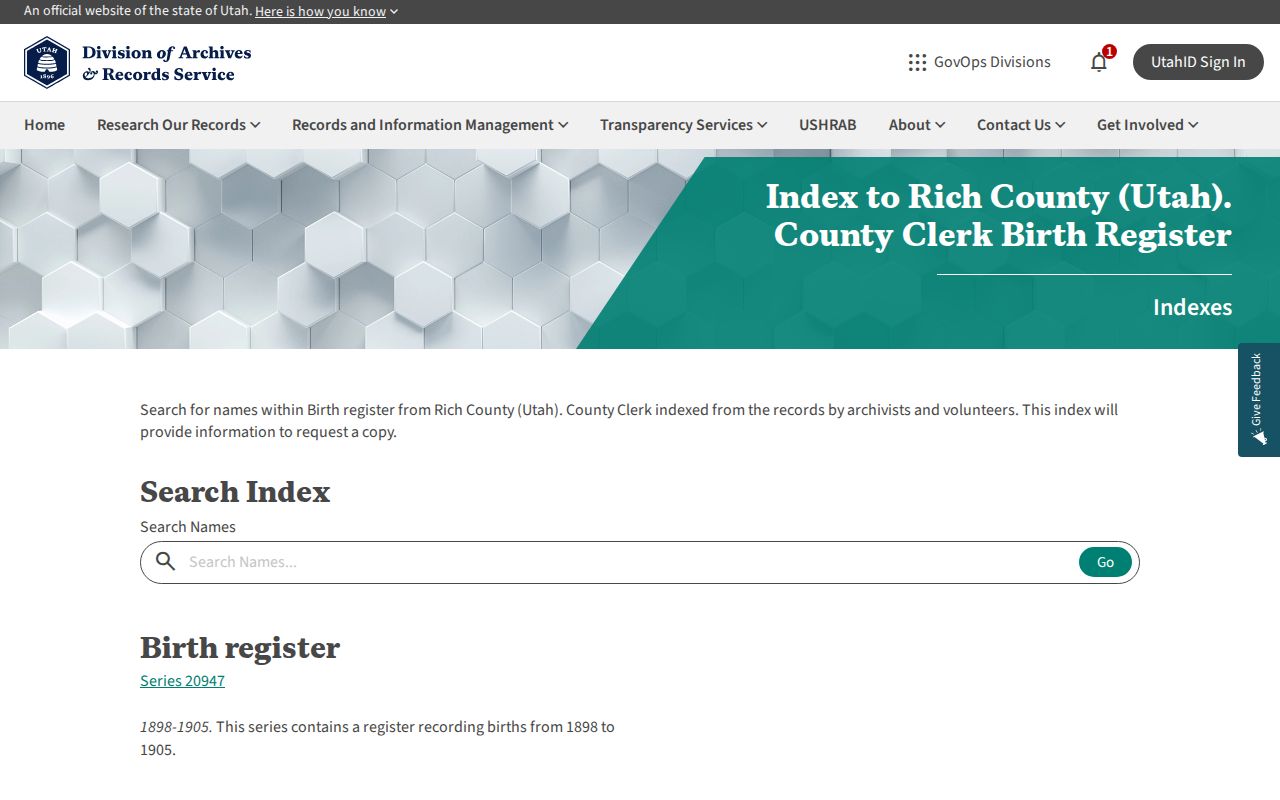
A birth-register entry proves identity, nothing more. The deed or court order still has to anchor the title chain in Rich County property records.
Probate Can Change the Name Chain
An owner's death rarely ends a chain cleanly. Transfer can pass through an executor, administrator, beneficiary, trust, or court order. Work the parcel first in the assessor record. Then check the recorder for a land instrument. Also search Utah Courts XChange for a probate case. A case file may hold an appointment, inventory, or will. It may also hold a final accounting or an order tied to the transfer. A death certificate proves death, not current title.
Do not assume a different estate or personal-representative name is an unrelated owner. The recorded deed and the case file decide that question. The county Archives listing includes First District Rich County court series. Exact historic probate coverage and copy rules vary. So ask the clerk which files are public. Also ask where older material is kept.
How Far Back Rich County Ownership Records Go
No official source pins down Rich County's first deed-book year or its online index cutoff. The recorder page confirms the current land-record role. Utah Archives identifies county recorder and court series. Neither publishes a starting year for the complete chain. Start with the parcel's latest deed. Then ask the recorder which earlier index or volume covers the date you need.
The archive's 1898-1905 birth register can help with a person's historical identity. Plats carry their own recorder dates and references. Neither one substitutes for a continuous deed series. A missing instrument may call for a focused county request. A boundary change may call for a probate file or a survey-plat record.
Coverage limit. No verified online deed-index cutoff is published in the available research. Ask the recorder which earlier books or Archives series cover the parcel and period before claiming a chain is complete.
Ask the Randolph Recorder for an Older Deed Chain
An online search will not always surface an earlier owner. Start from the last known deed rather than an unanchored surname. Give the Recorder & Surveyor the parcel number, current legal description, grantee, grantor, and approximate recording period. The next link may sit in a deed book, a scanned instrument, an index volume, or another series. Ask about it. Rich County offers no public online grantor-grantee endpoint. It states no index cutoff either. A counter question or a narrow written request may be needed.
The Randolph counter is at PO Box 322, Randolph, UT 84064, phone (435) 793-2005. Published hours are weekdays from 9 a.m. to noon and 1 to 5 p.m. A printed or emailed copy costs $1 per page; a certified copy costs $5 plus $1 per page. Ask for the recorded reference before ordering a long set of documents. Then work backward one instrument at a time.
Keep a chain worksheet. List each instrument's date, type, grantor, grantee, legal description, recorder number or book and page, and any correction or release it references. If names shift through an estate, trust, or company, record the capacity exactly as it appears. The Utah Archives series list can point to historical volumes. XChange may help identify a related court case. Neither substitutes for the next land instrument.